There’s a version of this that’s easy to explain: beautiful island, warm weather, affordable wellness offerings. But that doesn’t account for why people come back. And they do, in numbers that suggest something harder to name.
Walk through Ubud on any given morning and you’ll notice something. The streets are full of people doing what looks, from the outside, like various forms of self-improvement, heading to yoga, to a sound bath, to a healer, to a ceremony. But spend a few days talking to them and a different picture emerges. Most of them aren’t here because Bali was on their bucket list. They’re here because something in their lives reached a point where staying put felt impossible. A relationship ended. A job stopped making sense. A period of health problems or grief or a quieter, less nameable kind of feeling stuck.
Bali, for whatever reason, has become the place people come when they’re ready to change something, or when they suspect they might need to, even if they can’t quite say what yet.
What Bali Has That Most Places Don’t
The honest answer is not the rice terraces or the retreats, although both help. It’s that Bali has a living spiritual culture, not a preserved one, not a performed one, but an active daily practice that has been running continuously for centuries and hasn’t been replaced by modernity.
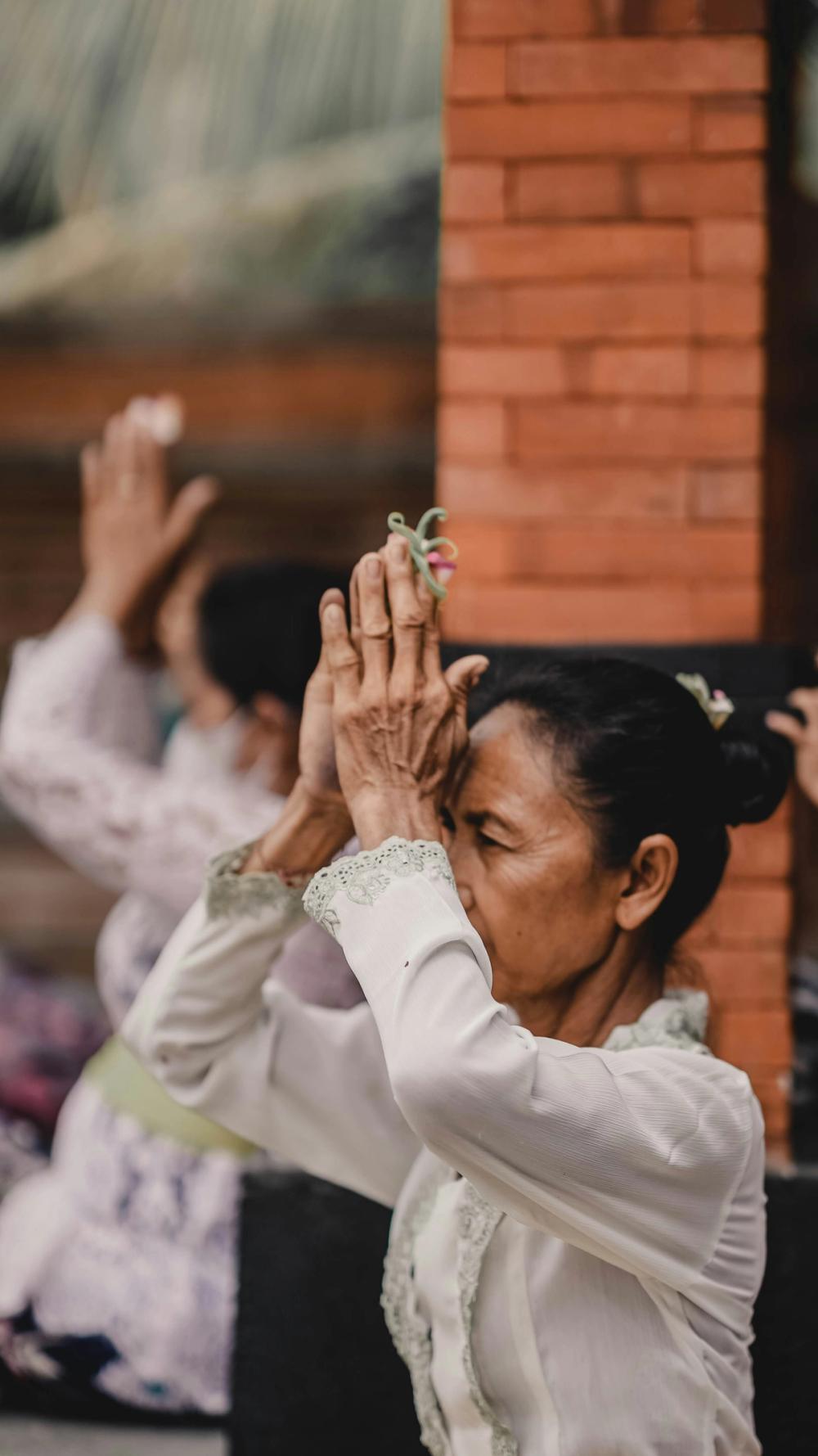
The Balinese Hindu tradition structures daily life around the principle of Tri Hita Karana, three sources of wellbeing: harmony with the divine, with the community, and with the natural environment. This is not a philosophy people study. It’s expressed in the small daily offerings placed at doorways and temple shrines every morning, in the ceremonies that mark births, marriages, deaths, harvests, and transitions of every kind, in the way that healers, Balians, are considered part of the community infrastructure rather than alternative practitioners.
Most visitors don’t participate in any of this directly. But they exist alongside it. And there’s something in that proximity to a culture that hasn’t separated the spiritual from the everyday that tends to loosen something in people who have.
The Ecosystem That Built Around the Energy
Bali’s wellness scene didn’t emerge from a tourism board strategy. It arrived organically, practitioner by practitioner, over several decades. Teachers came for a workshop or a sabbatical and stayed. Healers trained in India, or in the lineages of their home countries, found that Bali offered the kind of environment, the ease, the openness, the quality of life, that made serious practice sustainable.
What resulted is a density of genuine expertise that is genuinely rare. Ubud in particular has yoga teachers, meditation guides, somatic therapists, breathwork facilitators, traditional Balinese healers, and practitioners of dozens of modalities, many of international standing, within a few square kilometres of each other. The quality is uneven, as it is everywhere. But the concentration of the good is unusual, and it compounds: skilled practitioners attract committed students, who become teachers, who attract more practitioners.
Why Here, Why Now
There’s a permission structure that operates in Bali that doesn’t operate in most places people come from. At home, crying in a yoga class is embarrassing. Telling your colleagues you’re going to a cacao ceremony is a conversation you have to manage. Taking two weeks off to sit in silence feels like a statement about your priorities that requires justification.
In Bali, nobody needs an explanation. The island has enough critical mass of people doing exactly that, coming to work on something, to release something, to find something, that it becomes ordinary. The social friction disappears. And without that friction, people do things they’ve been circling at home for years.
That’s not a mystical explanation. It’s a social one. And it might be the most accurate answer to why Bali works for so many people, and why they come back. Not because the island healed them. Because it gave them enough room to do it themselves.
Sana Bali maps the wellness ecosystem across the island, practitioners, retreat centres, studios, healers, and the spaces between.